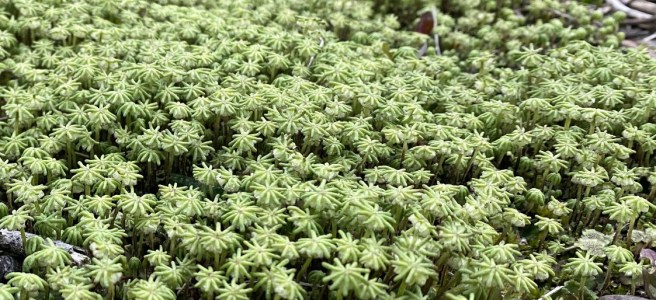

2024 has been a great year for the common liverwort (Marchantia polymorpha) in Edinburgh. It is almost everywhere you look. I started collecting M. polymorpha in 2021. During the subsequent years, I realised that the species was harder to find during the summer months. This year, at the beginning of September, it is abundant in large patches along kerbs and the bases of walls. I should mention that Marchantia polymorpha actually comprises three subspecies, only one of which is common in urban habitats. This is M. polymorpha subsp. ruderalis, which I enjoy looking out for, when I walk trough human settlements. This subspecies ruderalis is the main topic of this post.
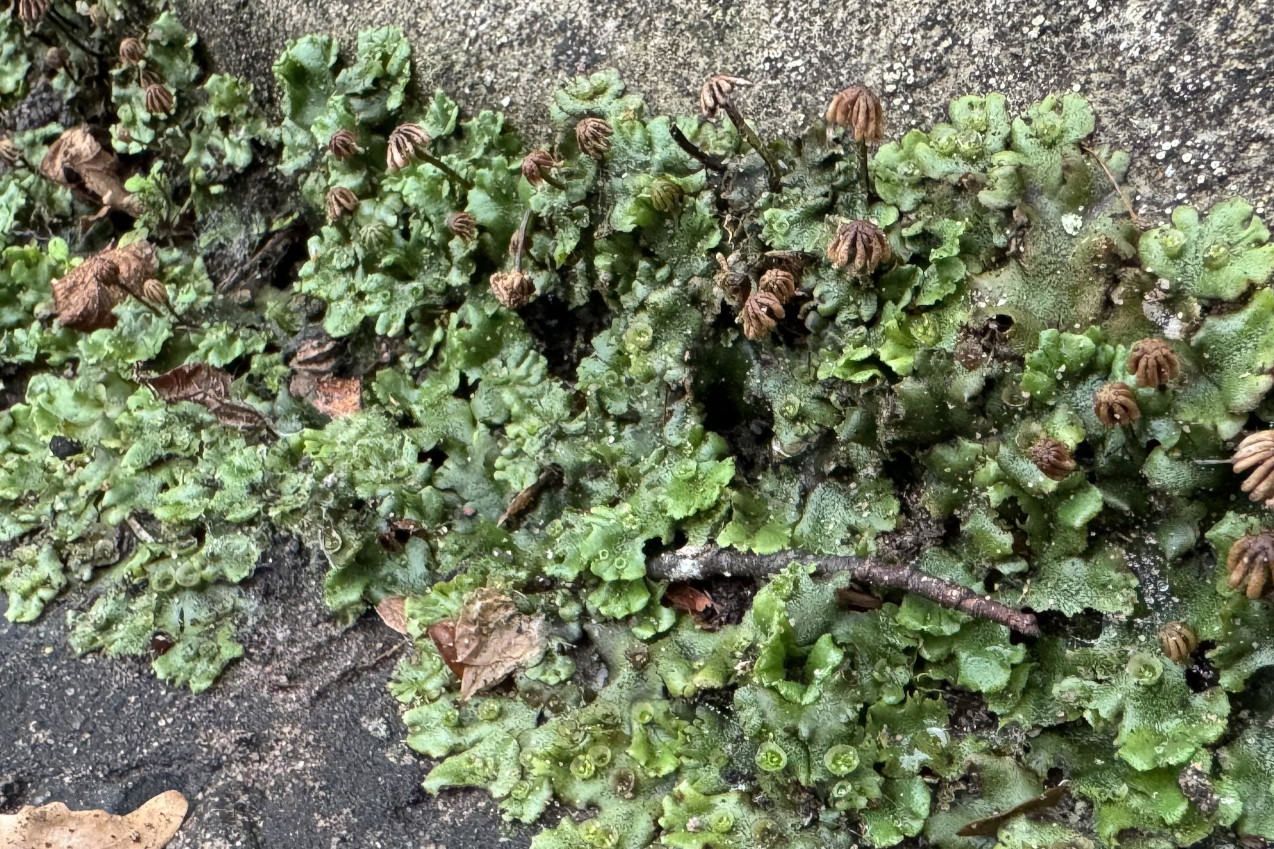
Machantia polymorpha is probably the most well known liverwort. It is a member of the thalloid liverworts, a group that do not have stems and ‘leaves’. Instead, their body consists of lobes. This is body plan is called a ‘thallus’ (plural: thalli). There are many species of thalloid liverwort. But Marchantia belongs to a special subgroup of these, the complex thalloids. These have thalli with different layers of cells that fulfil different functions. Many complex thalloid liverwort species have air chambers with pores – functionally similar to the cavities and stomata of the leaves of vascular plants. They also have special reproductive structures, which are called gametangiophores. These are the structures that carry the reproductive cells. Marchantia polymorpha has separate sexes. There are male and female plants, and each sex produces a specific type of gametangiophore. The female ones look a little like palm trees, shown in the banner at the top. The male ones are more umbrella-like, see below.

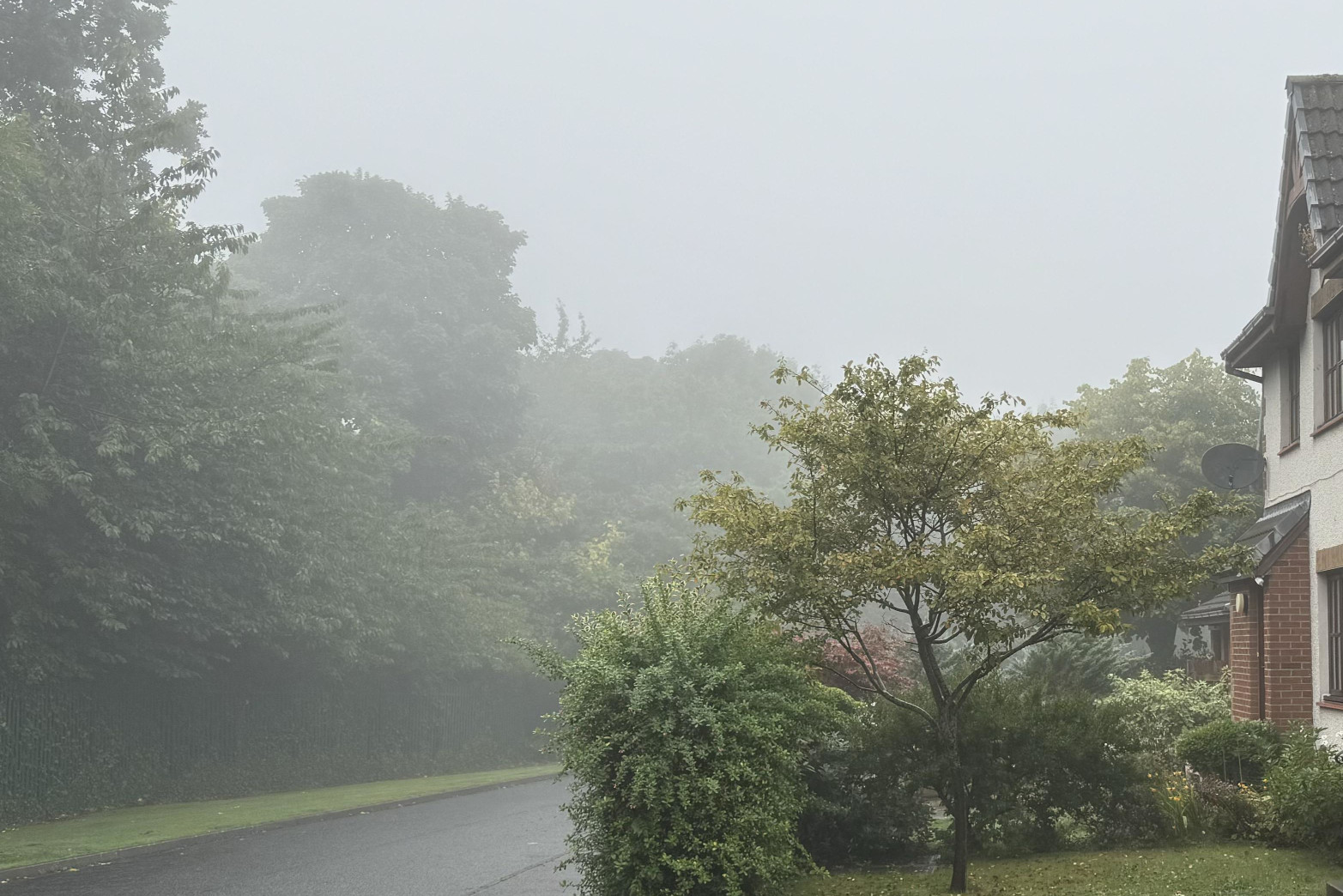
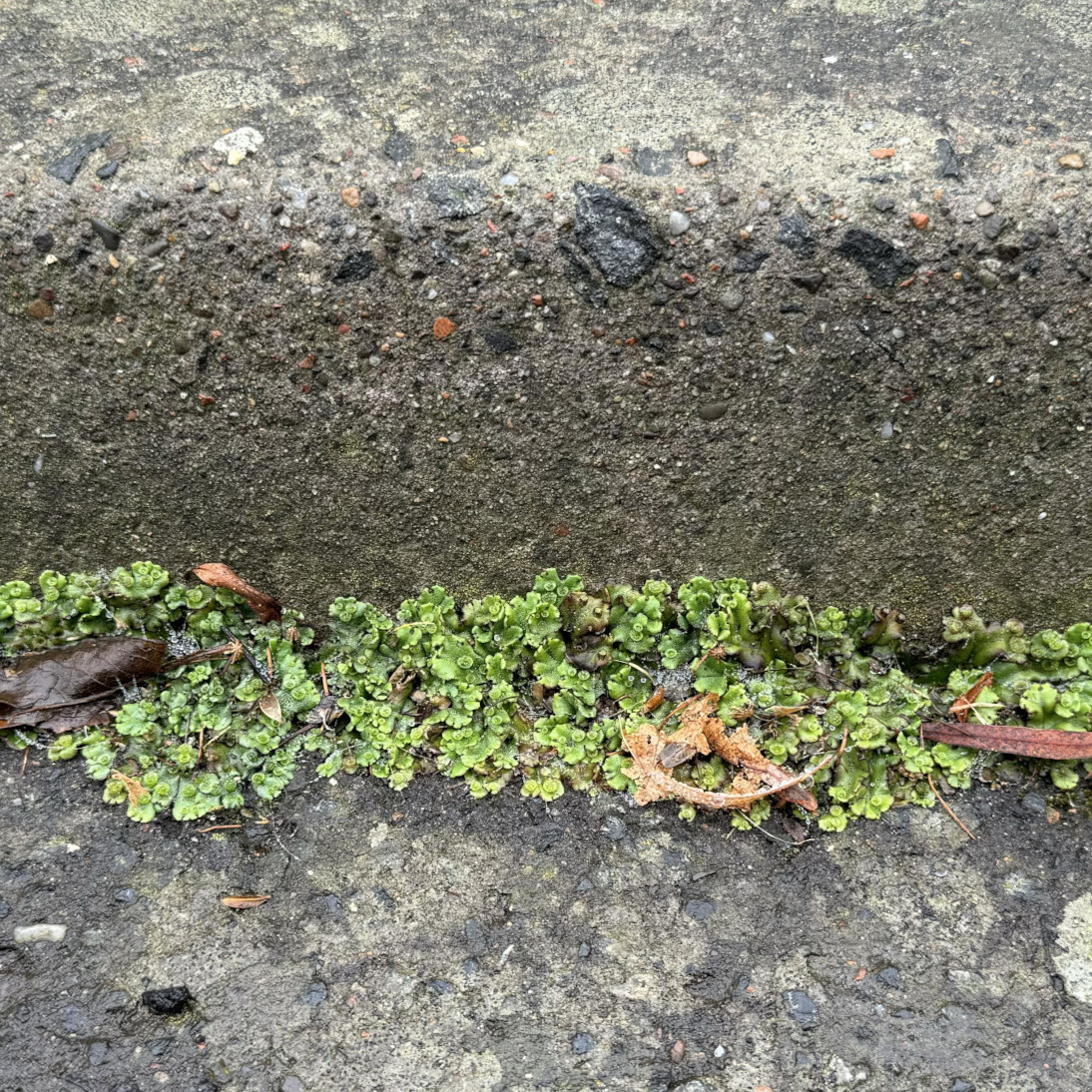
M. polymorpha subsp. ruderalis is relatively drought resistant for a liverwort. But it cannot stand long dry spells nor prolonged exposure to direct sunshine. I found it to be most abundant during the winter half of the year when the weather was cool and humid. I remember, though, that I struggled finding specimens after periods of snow. So, it does not seem to like very cold temperatures or perhaps gritting salt. Collecting in summer was not easy, and I often only found dry discoloured specimens on the north side of buildings where there was little, if any, direct sun light. But this summer was short in Edinburgh. There were no long spells of dry weather, and the beginning of September has been quite foggy. Here is a gallery with some Marchantia impressions.

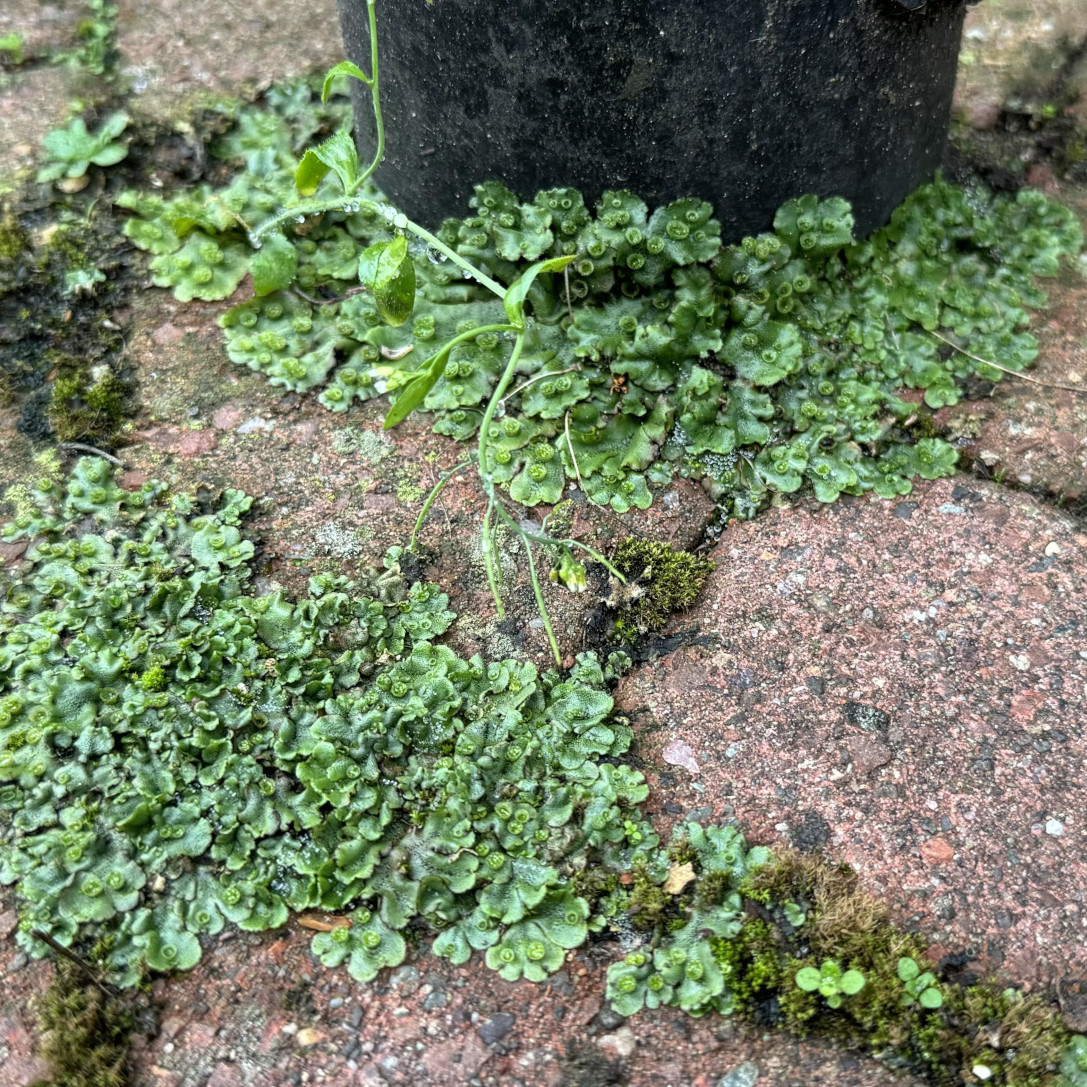
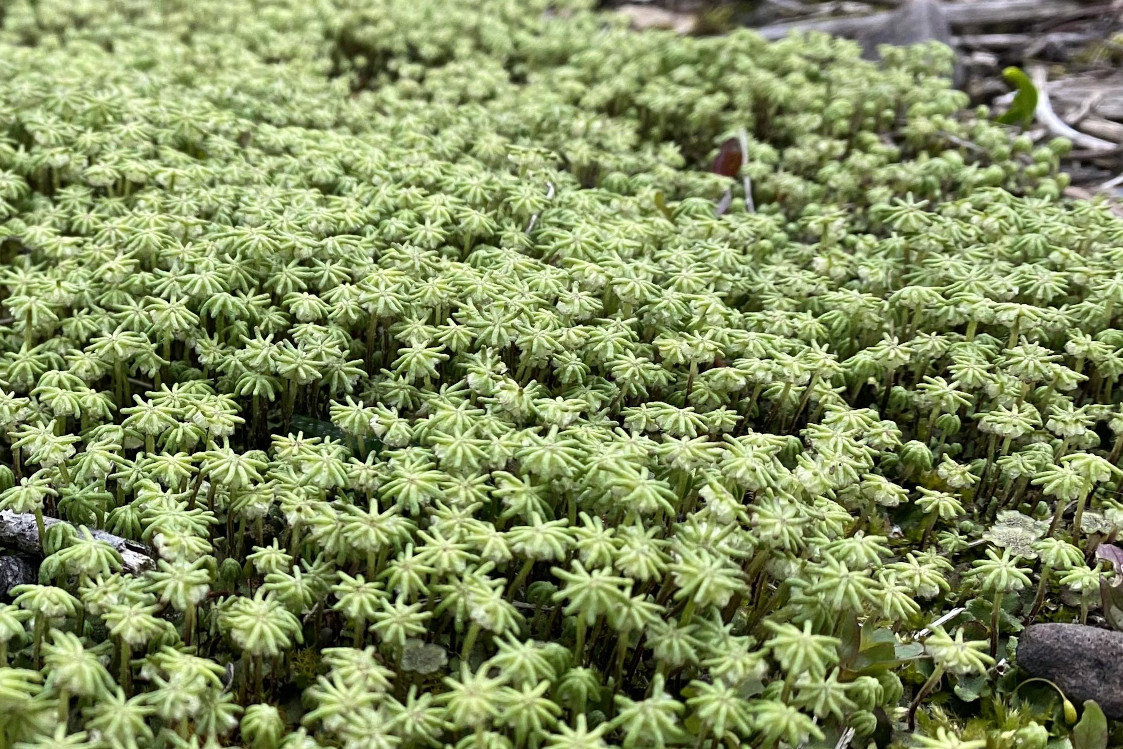
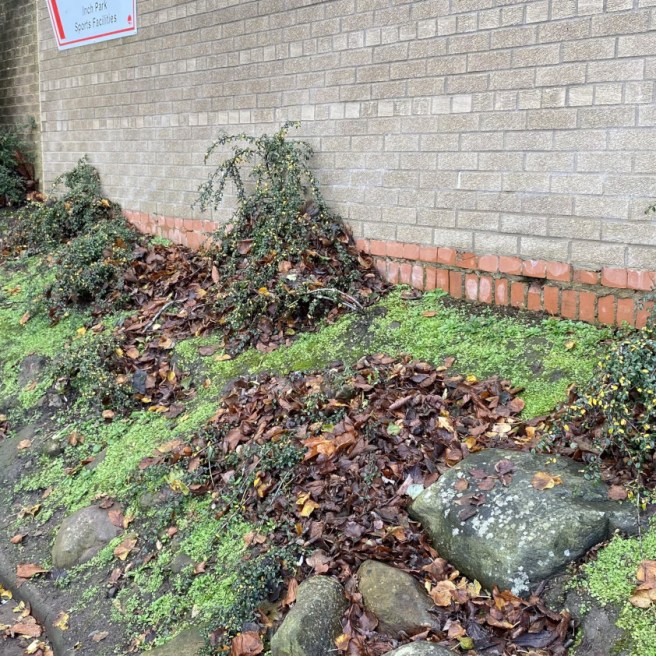
I mentioned the complex thalloid liverworts. There are a few other species, which may be seen in urban environments. These are the crescent-cup liverwort, the great scented liverwort, and the snakewort. The crescent-cup liverwort, Lunularia cruciata, grows in similar habitats as M. polymorpha. It is not uncommon to find both growing together. Different to Marchantia, L. cruciata is said to be more heat resistant, it has in recent decades colonised central and northern Europe from the Mediterranean. In previous years, I have seen much more of it than of Marchantia during the summer months. Notably there were huge patches of L. cruciata on the Cameron Toll car park by the wall of the tennis courts. This year, there seems to be much less of it.
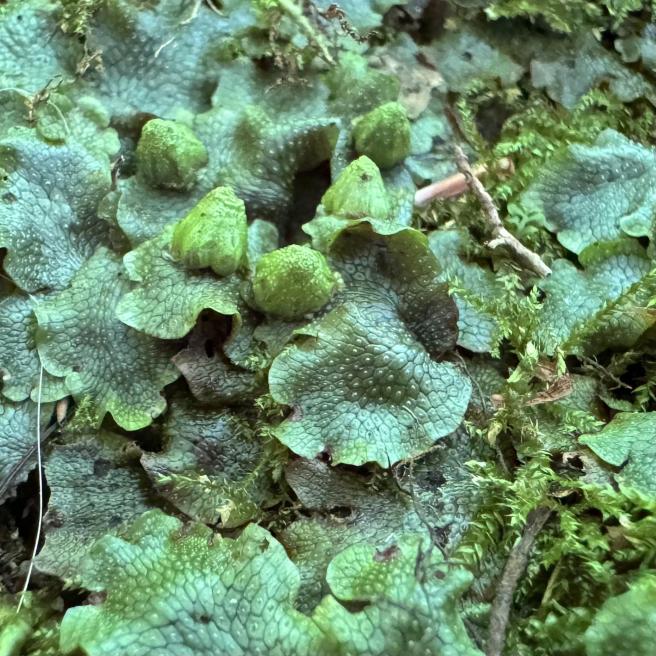
The other two species of complex thalloids that I want to mention are not exactly urban species, but they may be seen within human settlements. Both are members of the cone-headed genus Conocephalum. Conocephalum grows at more shaded and more or less permanently moist sites. I did not notice much change in its distribution. In Edinburgh, it can be seen, for instance, along Braid Burn in the Hermitage of the Braid and near the Nairns oatcake factory. It also grows or along Burdiehouse Burn in Moredun Wood. The great scented liverwort is C. conicum and the snakewort is C. salebrosum. Both are rather similar. The fact that they are different species was published only in 2005. The most obvious difference between them is perhaps that the margins of the air chambers are sunken in C. salebrosum, giving it a somewhat scale-like structure. These margins are level with the other epidermis cells in C. conicum. Below, there is a photo of C. salebrosum from near the Hobgoblin Ha’ (Yester Castle, near Gifford). This photo also shows the cone-like reproductive structures. Later in development, they will be raised on a stalk.
Take part
Have you made any observations of complex thalloid liverworts this year? Maybe you you even have observed a trend, similar or different? Feel free to get in touch or to leave a comment below!
Digging deeper
Here are some links to the BBS field guide accounts for the species I mention in this post.
Marchantia polymorpha,
Lunularia cruciata, and
Conocephalum conicum/salebrosum.
The paper that describes Conocephalum salebrosum and lists differences to C. conicum as a new species is:
Szweykowski, J., Buczkowska, K., & Odrzykoski, I. J. (2005).
Conocephalum salebrosum (Marchantiopsida, Conocephalaceae) – a new Holarctic liverwort species.
Plant Systematics and Evolution, 253(1), 133–158. https://doi.org/10.1007/s00606-005-0301-0

 Bryophyte Evolutionary Genetics